
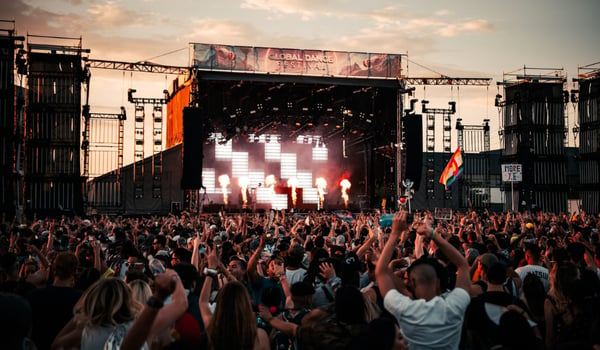
Festival season is approaching, bringing its usual set of challenges: selling the remaining tickets, ensuring a smooth on-site experience, handling unexpected issues, and already laying the groundwork for next year's edition.
Today, a festival's success depends on much more than its lineup. It also relies on the ability to use audience data effectively to personalize communications, anticipate attendee needs, and manage operations in real time.
This checklist outlines the key CRM and marketing actions to implement before, during, and after your festival to deliver the best possible festivalgoer experience while helping teams stay in control.
Why Festivals Need a CRM Today
With communication channels multiplying, regulatory requirements evolving (GDPR, Law 25, etc.), and audience expectations continuing to rise, festivals need a centralized view of their audience data to deliver more personalized experiences.
A CRM designed for festivals helps organizations:
- Improve the festivalgoer experience
- Segment audiences more effectively
- Automate marketing campaigns
- Monitor ticket sales in real time
- Centralize first-party data
- Build loyalty from one edition to the next
For marketing, ticketing, and customer relationship teams, CRM has become an essential operational tool before, during, and after the event.
Before the Festival: Maximize Sales and Prepare Operations
1. Monitor Ticket Sales in Real Time
In the weeks leading up to the festival, marketing teams need the ability to adapt quickly.
Real-time sales monitoring makes it possible to:
- Identify ticket categories that have not yet sold out
- Track attendance levels by day or ticket type
- Detect slowdowns in sales performance
- Prioritize marketing actions based on capacity objectives
Setting up automated alerts tied to sales or occupancy thresholds also enables teams to anticipate issues rather than react to them at the last minute.
 Visualization of the occupancy rate on the Arenametrix dashboard
2. Launch Targeted Campaigns to Sell Remaining Tickets
As the festival approaches, every campaign matters. The goal is no longer to send mass communications, but to reach the right audience with the right message.
CRM segmentation makes it possible to identify:
- Local residents likely to purchase at the last minute
- Previous editions' last-minute buyers
- Contacts whose artistic preferences match the tickets still available
- Individuals who have shown interest in the festival through campaign clicks, page visits, cart abandonment, and other engagement signals
This targeted activation strategy improves conversion rates while reducing marketing pressure on the broader database.
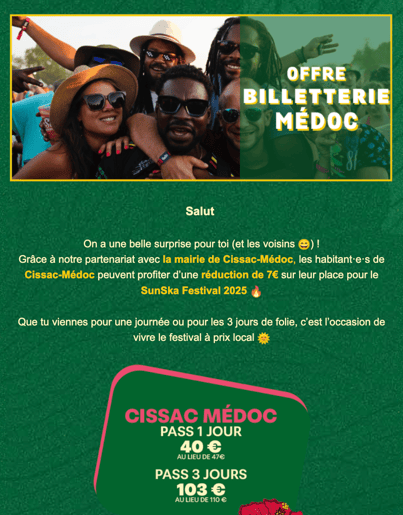 Example of a targeted communication at the 2025 SunSka Festival
Before the Festival: Prepare for Festivalgoer Arrival
3. Organize Your Database Before the Gates Open
A festival attracts a wide range of attendee profiles: VIP guests, pass holders, parking purchasers, campers, single-day visitors, and more.
Preparing CRM segmentation in advance saves valuable time once the event begins.
Useful audience segments include:
- VIP ticket buyers
- Single-day ticket holders
- Camping and parking purchasers
- Attendees present on a specific day
- Returning customers and loyal festivalgoers
Creating dynamic, ready-to-use lists makes it easier to launch marketing and operational communications quickly when needed.
4. Automate Practical Event Communications
In the days leading up to the event, festivalgoers expect clear and reassuring information: schedules, access routes, parking, camping, available services, weather updates, and safety guidelines. Preparing these communications ahead of time reduces last-minute operational pressure.
Ideally, messages should be personalized based on purchased tickets while also promoting relevant upsell opportunities such as parking, camping, VIP upgrades, cashless solutions, or merchandise.
Marketing automation workflows play a key role here:
- Automated transactional emails
- Follow-up messages for non-openers
- SMS or WhatsApp journeys
- Purchase-related communications for contacts who cannot be contacted for marketing purposes
This level of personalization enhances the festivalgoer experience before attendees even arrive on site.
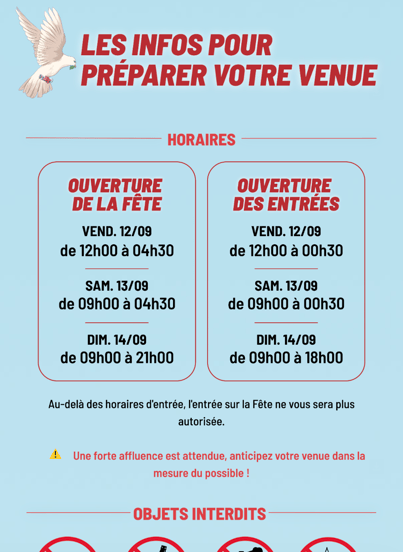 Exemple des informations pratiques envoyées par la Fête de l'Humanité 2025Example of practical information sent by the Fête de l'Humanité 2025
During the Festival: Manage the Unexpected and Capitalize on Momentum
5. Keep Selling Throughout the Event
The festival does not mark the end of the sales cycle, quite the opposite. Attendees already on site are often the most qualified audience for promoting additional event days or premium experiences.
Highly effective campaigns include:
- Promoting the next day's lineup to single-day ticket holders
- Offering VIP upgrades after the first day
- Sending limited-time offers
- Activating context-based SMS campaigns
With CRM segments prepared in advance, these activations can be launched quickly without placing additional strain on teams.
6. Prepare for Crisis Situations Before They Happen
Weather disruptions, schedule changes, cancellations, or logistical incidents are part of event operations. The real challenge is not the crisis itself, but being unprepared when it happens.
To communicate quickly when every minute counts, prepare:
- Weather alert templates
- SMS communication workflows
- Pre-built audience segments ready for activation
- Internal approval processes and trigger thresholds
Every year, Schloss Benrath hosts the Lichterfest, welcoming nearly 10,000 visitors. Together with Arenametrix, the organization implemented an automated communication journey designed to anticipate weather-related risks and manage emergency situations.
During the 2024 edition, which was interrupted due to severe weather alerts, festivalgoers immediately received clear information regarding the cancellation and refund process. The result was an average communication open rate of 94.78% across the entire visitor journey.

During the Festival: Collect Valuable Audience Data
7. Use On-Site Attendance to Deepen Audience Knowledge
A festival is one of the few moments when audiences are physically present, highly engaged, and receptive. It is a valuable opportunity to enrich your understanding of attendees.
Effective tactics include:
- Running a contest with an exclusive reward
- Promoting newsletter sign-ups through QR codes
- Offering Wi-Fi access in exchange for form completion
- Collecting preferences and areas of interest
- Measuring satisfaction in real time on site
This data can then be used to personalize future marketing campaigns and improve the experience at upcoming editions.
After the Festival: Turn Experience into Long-Term Value
8. Send a Satisfaction Survey While the Experience Is Still Fresh
The days immediately following the festival are critical. The experience is still top of mind for attendees.
A thank-you email combined with a satisfaction survey helps organizations:
- Identify areas for improvement
- Measure overall satisfaction
- Identify brand advocates
- Anticipate churn risks
- Inform planning for the next edition
Timing is essential: the sooner the survey is sent after the event, the higher both response rates and feedback quality will be.
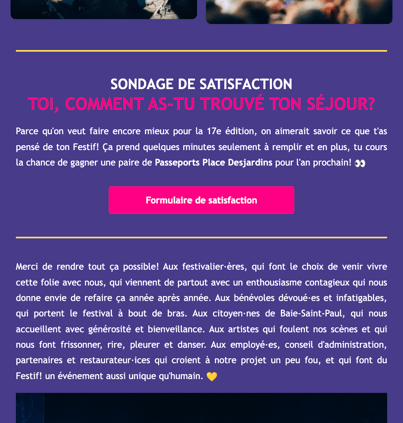 Example of the Festif! 2025 Thank-You Newsletter
9. Automate Follow-Up Based on Satisfaction Levels
Not every festivalgoer should receive the same follow-up communication.
With CRM and marketing automation, organizations can:
- Thank and nurture satisfied attendees
- Offer exclusive opportunities to advocates
- Address negative feedback quickly before it becomes public
This approach turns the satisfaction survey into a genuine CRM tool rather than a simple post-event questionnaire.
Festival CRM: A Driver of Sustainable Growth
Today, the most successful festivals are those that use event-focused CRM platforms to centralize audience data, personalize marketing campaigns, and improve the festivalgoer experience at every stage of the journey.
When used effectively, CRM becomes a powerful growth driver that helps organizations:
- Sell more efficiently
- Better understand their audiences
- Streamline operations
- Increase revenue
- Build long-term festivalgoer loyalty
Because while a festival may only last a few days, the relationship with festivalgoers is built year-round.

