
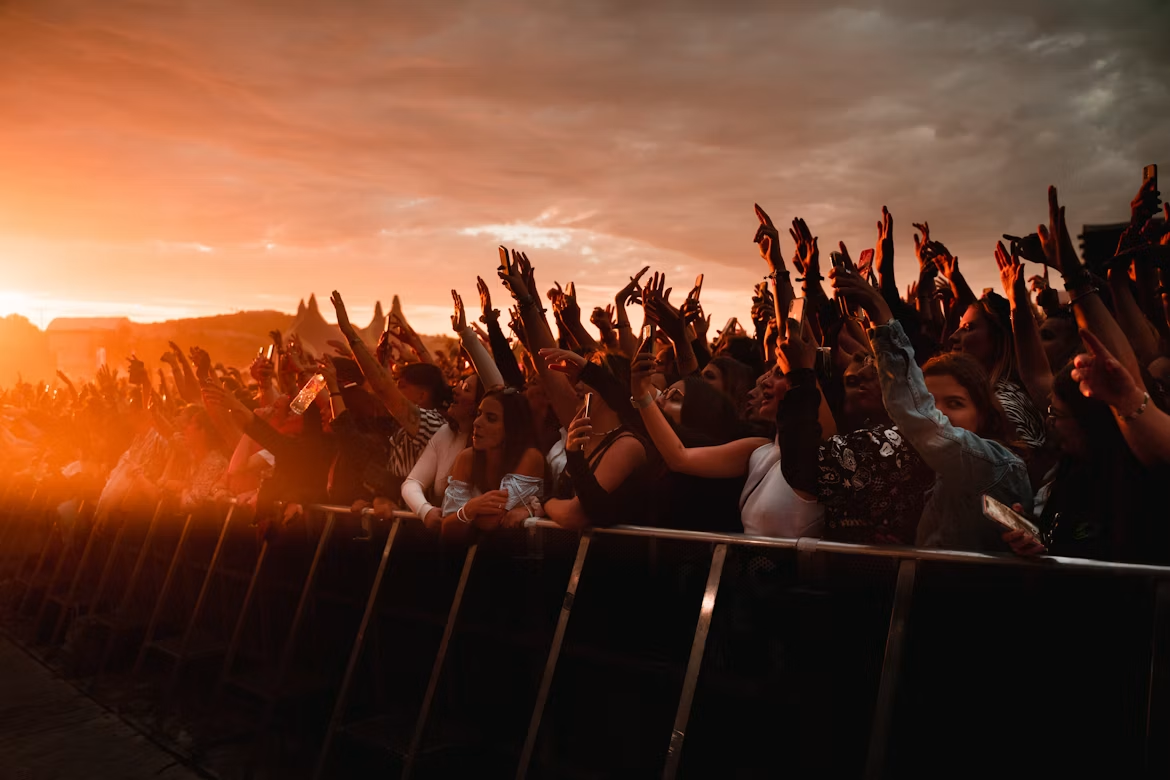
The final notes are ringing out, festival-goers are heading home, and the production teams are already starting to dismantle the stages. After months of preparation and a few intense days, the festival is over. Well, not quite.
Because while the event may be over, the relationship with your audience doesn’t have to end there. The days and weeks following a festival are a valuable opportunity to build loyalty, collect audience data, get to know your audience better and lay the groundwork for the next edition.
So, what should you say to your festival-goers once the festival is over? Here are six messages to help you extend the experience and build a lasting relationship with your audience.
"You were there. So… shall we do it again next year?"
Objective: Turn the excitement of the final day into immediate loyalty.
The final day of a festival is probably one of the moments when audience attachment to the event is at its strongest. Festival-goers have just spent several days immersed in music, discovery and shared experiences. They are still in the moment, the memories are fresh, and the desire to come back can be particularly strong.
That makes this a moment worth acting on: turning emotion into a concrete act of loyalty.
There are several ways to do this:
- Offer tickets for the next edition at a preferential price
- Open an early-bird sale exclusively to this year’s festival-goers
- Offer an exclusive benefit, such as a discounted rate, gift or priority access
- Offer a blind pass, allowing festival-goers to secure their place before the line-up is even announced
A blind pass can be particularly effective for festivals with a highly engaged community. Festival-goers buy their ticket before knowing which artists will be playing because they trust the event and already know they want to be part of it.
It is also a way to shift from a ticketing mindset to a loyalty mindset: people are not coming back solely for a particular artist or line-up. They are coming back for the festival experience itself.
✍️ Good idea to take away: Test a blind pass or an ultra-early pre-sale with your most engaged festival-goers. It is a simple way to gauge the strength of your audience’s attachment to the event while generating early revenue for the next edition.
"Thank you for being there. Let’s relive this edition together!"
Objective: Keep the experience alive with the right post-festival content.
The days following the festival are the perfect time to keep the experience going.
A first thank-you email could, for example, highlight a few key figures from the edition: the number of festival-goers welcomed, artists booked, volunteers involved, litres of water distributed, kilometres travelled by the teams...
These figures help bring the scale of the festival to life and remind audiences that they were part of something bigger.
Then comes the aftermovie and all the content that helps bring the best moments back to life: photos, artist playlists, interviews, behind-the-scenes content, best-ofs, anecdotes and moments the audience may not have seen.
The goal is not simply to fill your content calendar. It is to bring an emotion back to life. Good post-festival content should make those who were there think, “I was there!”, and those who missed it think, “I’m definitely not missing it next year.”
✍️ Good idea to take away: Don’t limit your best post-festival content to the people who attended. Share it across your different channels and with your wider audience. Your aftermovie, photos and highlights can also help those who missed this edition discover the experience and start looking forward to the next one.
"Tell us what you thought."
Objective: Listen to your festival-goers and turn their feedback into useful data.
Once the festival is over, there is one question worth asking: how was the experience? A post-event satisfaction survey is a must, but it should be more than a questionnaire designed to generate an average score.
It can help answer very practical questions:
- How satisfied were festival-goers overall?
- What were the highlights of the edition?
- What were the pain points?
- What would they like to see improved next time?
- Are they planning to come back?
It can also help you learn more about your audience:
- Which artists or genres are they interested in?
- How did they travel to the festival?
- Who did they experience the festival with?
- What kind of content would they like to receive?
Over time, this information can enrich your understanding of your audience and help you make future communications more relevant.
✍️ Good idea to take away: Don’t close the loop with a simple “thank you for taking part”. A few months later, come back to your community with a message such as: “You asked for it. We made it happen.” It is a powerful way to turn audience data into trust.
"What if we stayed in touch between editions?"
Objective: Keep the relationship going during quieter periods.
Between editions, the risk is always the same: disappearing from the radar, then coming back a few months later with an email saying, “Tickets are now on sale!”. From a festival-goer’s perspective, the relationship can then feel purely transactional: you only get in touch when there is something to sell.
Quiet periods are actually an often-overlooked opportunity to keep people connected to the festival without constantly trying to convert them.
The principle is simple: create moments that give you a genuine reason to get back in touch. For example:
- “Open today’s door”: An advent calendar featuring 24 memories, anecdotes, exclusive content, playlists, gifts or community-only perks.
- “24 things you probably didn’t know about the festival”: Little-known stories, surprising figures, archive photos and behind-the-scenes moments from previous editions, shared throughout the month.
- “The women who have shaped our festival”: A playlist featuring female artists who have performed at the festival, accompanied by memories, stories or interviews.
- “It all started X years ago…”: A look back at the festival’s history: its first posters, key figures, artists who have graced its stages, iconic moments and audience stories.
The point is not to communicate more for the sake of it. It is to find good reasons to stay in touch and create content that people genuinely want to open, watch or share.
✍️ Good idea to take away: Build your off-season content calendar before the festival is even over. By identifying key dates and relevant editorial hooks in advance, teams can avoid the classic “We have nothing to say right now” problem and keep the relationship alive in a consistent, creative way.
"What would your dream line-up look like?"
Objective: Turn festival-goers into active members of your community.
Listening to your audience is great. Giving them a role in shaping the festival is even better. For example, you could ask:
- Which artist would you love to see?
- Which new act would make you want to come?
- What format would you like to see again?
- What new service could improve your experience?
- Which stage did you enjoy the most?
- What memory from this edition would you like to share?
These questions can take the form of polls, votes, games or other participatory content.
The goal is twofold: Gather useful insights to better understand your festival-goers, and strengthen their sense of belonging.
Because a festival is not simply an event people attend for a few days each year. It can become a community people feel part of, and help shape. And that distinction matters when it comes to loyalty: people are more likely to return to something they feel personally connected to.
✍️ Good idea to take away: Give your community a voice and show them that you heard it. A vote does not have to determine your programming. It can simply open up a conversation and create a stronger sense of connection.
"Loved Y? You might like Z."
Objective: Personalise communications and build a lasting relationship.
Not every festival-goer expects the same thing from a festival.
A first-time visitor discovering the event, a regular who has been coming for ten years, a metal fan who came specifically to see three bands, and someone who mainly comes for the overall experience will have very different expectations and interests. So why send them exactly the same messages?
The data you collect over time can help you personalise the relationship:
- Thank first-time visitors and loyal regulars in different ways
- Recommend content based on the artists they saw or enjoyed
- Offer early access to your most loyal festival-goers
- Re-engage people who have not returned for several editions
- Tailor communications to the preferences they have expressed
- Highlight artists, content or experiences based on their interests
This is where data and CRM really come into their own: understanding your audiences better so you can deliver a more relevant experience while making your marketing more effective.
✍️ Good idea to take away: Start small. Personalisation does not mean building dozens of complex marketing journeys. A first segment based on loyalty, favourite artists or purchasing behaviour can already make your communications significantly more relevant.
Building Festival Loyalty After the Event: The Role of CRM
After the festival, loyalty does not stop at sending an aftermovie or a satisfaction survey. To build a lasting relationship, festivals need to understand their audiences and make the most of their data: attendance history, purchasing behaviour, preferences, satisfaction, marketing interactions and more.
That is the role of a festival CRM capable of bringing this information together and turning it into actionable insights.
With Arenametrix, teams have access to an Audience Data Platform designed for the live entertainment industry. They can segment audiences, personalise campaigns and automate communications, while measuring their impact on loyalty, repeat purchases and revenue.
The goal? Not simply to communicate more between editions, but to send the right message, to the right festival-goer, at the right time.
Discover how Arenametrix helps festivals better understand their audiences and build lasting relationships with their festival-goers.

