Working on the relationship with your public is a long game for every cultural organisation: museums, venues, festivals. But take festivals: how do you build a relationship over time when the cultural offer itself is concentrated in a fleeting moment, a few days of intensity?
When designing a festival's communication, it is tempting to think the decisive moment lies in the weeks before the event. That would be to forget every step that leads a festival-goer to buy a ticket, and to deny an essential mechanic: the construction of the festival-goer's journey.
That journey should be paced by collective high points — the programme announcement, the ticket launch — but it must also rest on more targeted, personalised moments that build a singular relationship with the public. In this article, let us look at how a well-judged, impactful festival journey answers one precise goal: getting the right message, at the right moment, to the right person.
I. Identify your touchpoints
The months after a festival are a quieter time for a producer, but they matter just as much in managing the relationship with the public, for two reasons. First, the information and data gathered during the edition are precious for knowing your festival-goers. Second, the magic is still in participants' eyes, and the communication has to keep it alive.
First, analysis. A festival edition is a goldmine of data and audience knowledge: who are the first-time buyers? Where do they come from? How do you read the cashless data?
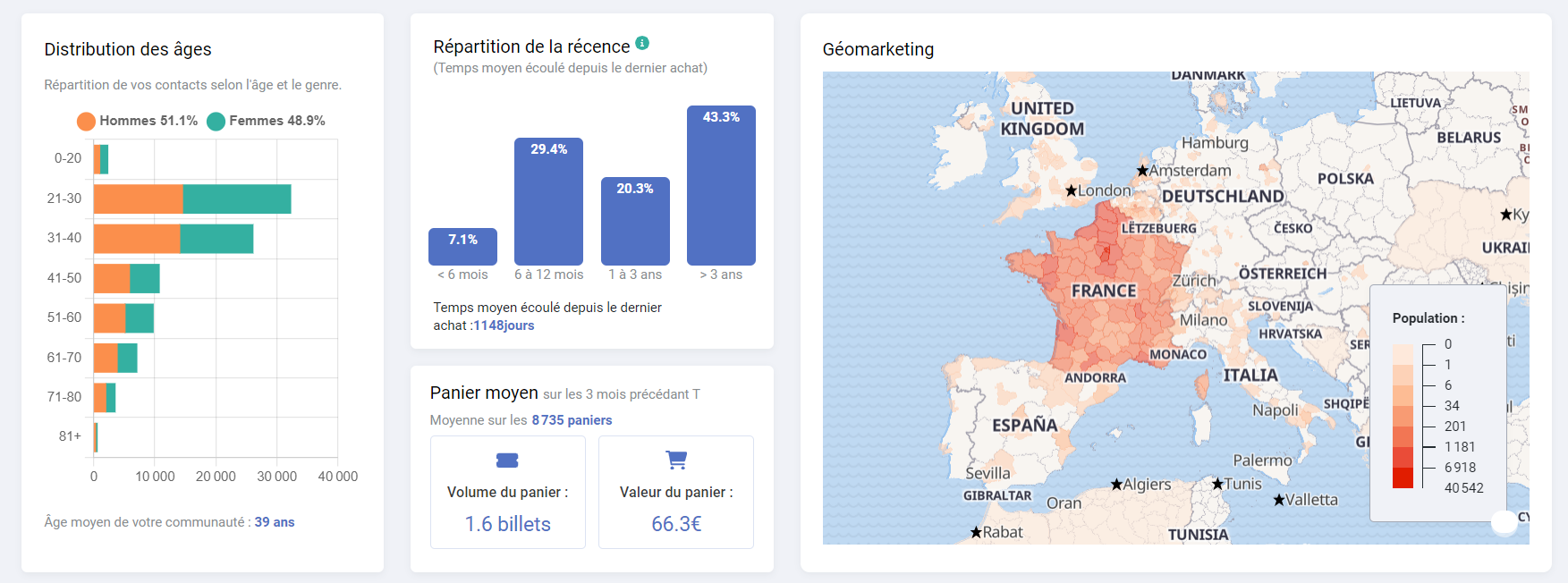
Screenshot of the community overview page in Arenametrix
(Click to enlarge)
This moment of analysis is necessary: it tells you precisely who your public is and sharpens the targeting of your marketing strategy. The audience knowledge gained after this edition is what lets you communicate in a targeted, personalised way with every potential festival-goer of the next one.
This period is also the time to analyse and break down the audience journey, and understand where your touchpoints with the public are: from the newsletter sign-up, through buying a ticket, to the event itself. These touchpoints let you accompany the public with content that fits the moment. The first step is therefore to sequence the festival-goer's journey and identify the key moments: the newsletter sign-up for newcomers, the ticket purchase for first-time buyers, the practical-information email before the event. These steps are the moments for personalised communication, alongside more general messages such as monthly newsletters or the programme announcement.
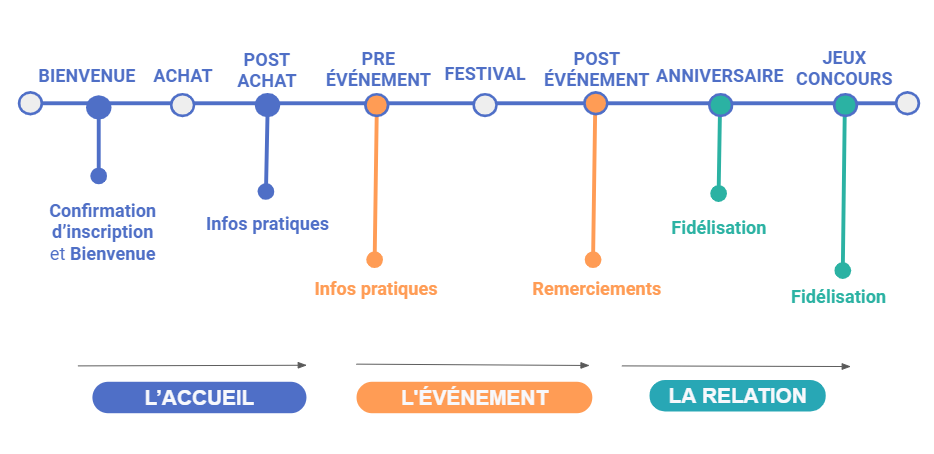
II. From welcoming new subscribers to the purchase:
offer a personalised experience
An optimal journey is a personalised one: whether you are discovering an event for the first time or attending every year, you do not want to receive the same kind of message. That means a differentiated welcome depending on the type of audience. Thanks to the analysis step above, you know your touchpoints with the public and can adapt your communication to each. Two touchpoints matter particularly:
- the newsletter sign-up form. This is a key moment for welcoming people who are starting to take an interest in your events. A good practice? Thank them, and offer to keep them posted on social media, or send them the aftermovie of the previous edition to whet their appetite.
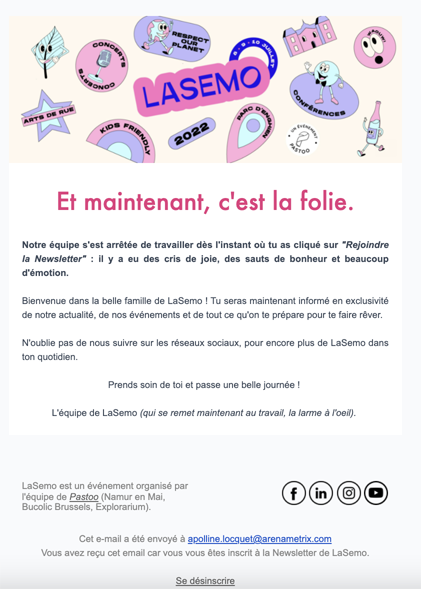
Example of a welcome newsletter, Festival La Semo, Brussels
-
the ticket purchase : an essential touchpoint for giving practical information and drawing your public into your world. A shared playlist? Collecting data? A link to social media?
And if you run several events across the year, you can promote those other high points right from the ticket purchase. Above all, remember to segment these messages: do not send the same thing to someone who has already been. A knowing nod will always land better than an impersonal email.
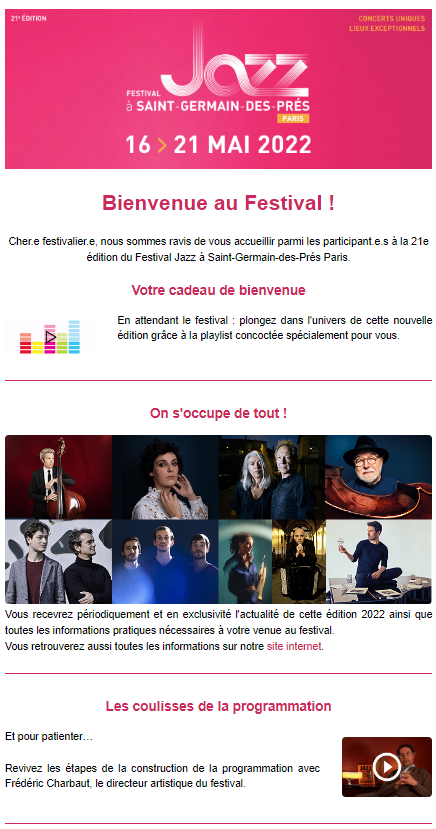
Example from the Jazz à Saint-Germain-des-Prés festival
At this stage you are probably already wondering: how do I avoid losing time building targeted communication for every new buyer? The answer is simple: equip yourself with a dedicated tool and go for automation. We say it often, but marketing automation really is essential for building a strong, targeted relationship with your public while saving precious time. You simply set up scenarios, which then trigger automatically according to the criteria you choose.
And beyond saving time, what you really gain is room to manoeuvre. Preparing your scenarios in advance and letting them run is what frees your hands for winning new festival-goers.
III. Before the festival, and during it
Your participants have bought their tickets and cannot wait to come.
This is the moment to give them relevant content and practical information.
Define your specific touchpoints so you can send well-judged, segmented information: the countdown days. Careful, none of your messages should feel redundant. Go for a sequenced delivery of information:
- First message = build desire (a playlist) and recall the highlights of the event.
- Second message = share practical information to improve the experience on site (cashless link, timetable and so on)
- Third message = prepare the festival-goer's arrival (times, transport options and so on)
We will say it again: the more these steps are segmented by audience profile, the more relevant they are. Remember to exclude non-buyers from practical-information sends, because that kind of message to someone who cannot attend creates real frustration.
By segmenting these messages you give them both weight and interest, because they will not be read as yet another campaign shouted into the void. The trap before an event is wanting to activate your whole database repeatedly and without precise segmentation.
IV. After the festival
The days that follow the event matter just as much for engaging your public, particularly by collecting their views. Through a satisfaction survey, the public is invited to give constructive feedback for future editions. People appreciate being asked, and it helps you understand the experience they had. It is also the moment to question the quality of the information you provided and the journey you designed, so you can rework them next time. And it is a chance to learn a little more about your public, by letting them fill in details you do not yet hold, a date of birth for instance.
This step also lends itself to fine segmentation: send thanks only to people who actually attended, for example. Likewise, a satisfaction survey does not mean the same thing to a first-time buyer as to a regular. Regulars have previous editions to compare with, so you can ask what they make of how your event is evolving. The more your public feels that you know them, without overdoing it, the more they will appreciate the personalisation of your communication.
In the same way, do not hesitate to come back a few weeks later with keepsake content: photographs, an aftermovie or anything else that brings the event back and prepares them for the next edition. It is a good moment to announce the coming dates and offer them a place on a waiting list to get tickets first.
In closing
In short, what matters is knowing your public and giving them content that fits, so as to build a relationship of trust over the long term. That is why a coherent festival journey is worth the work: it delivers relevant content without over-soliciting people. The more balanced that journey, the more your public will enjoy the day itself. And remember that what comes through in your communication can durably shape how your public sees the event you put on.
Want to work in depth on your festival-goers' journey?
Get in touch.