FC Zürich
By connecting behavioural, transactional and engagement data, FC Zürich has gained a far more precise understanding of its fan base.
Beyond a one-dimensional view of the fan
FC Zürich operates in an increasingly complex digital ecosystem. Fans interact with the club through ticketing, the website, merchandise purchases (in the club shop or online), single sign-on, the app and a growing number of communication channels.
Each of these interactions yields valuable information. Taken on their own, however, they give only an incomplete picture of the relationship between fan and club.
The strategic challenge for FC Zürich was therefore not simply to collect more data. What mattered was bringing existing information together and using it to better understand how different fan groups behave, what interests them and which channels they prefer for engaging with the club.
This work was part of the wider data project of the Swiss Football League, which aims to strengthen digital maturity across the league and give clubs a shared infrastructure for centralising, analysing and activating fan data.
A unified view of the FC Zürich fan base
The first step was to connect the club's principal data sources in Arenametrix .
These included:
-
-
ticketing and access control data via EVENTIM.Tixx
-
website and CMS interactions
-
e-merchandise purchases via Shopify
-
single sign-on data via Unidy
-
activity in the mobile app via Forza Football
-
By bringing these sources together, FC Zürich obtained a consolidated view of its fans' interactions across the whole digital ecosystem.
The same platform could then be used to activate those audiences through email, marketing automation scenarios, text messages and WhatsApp .
This centralisation laid the ground for moving beyond classic demographic segmentation and building fan profiles that can actually be used , based on real behaviour.
From database segments to meaningful fan personas
Age, gender and place of residence remain useful indicators. They are not enough, though, to explain how a fan relates to a football club.
Two people with similar demographics can have a completely different relationship with FC Zürich: one attends every match while another buys tickets only occasionally. One relies mainly on the mobile app while another responds more to family-oriented events or merchandise offers.
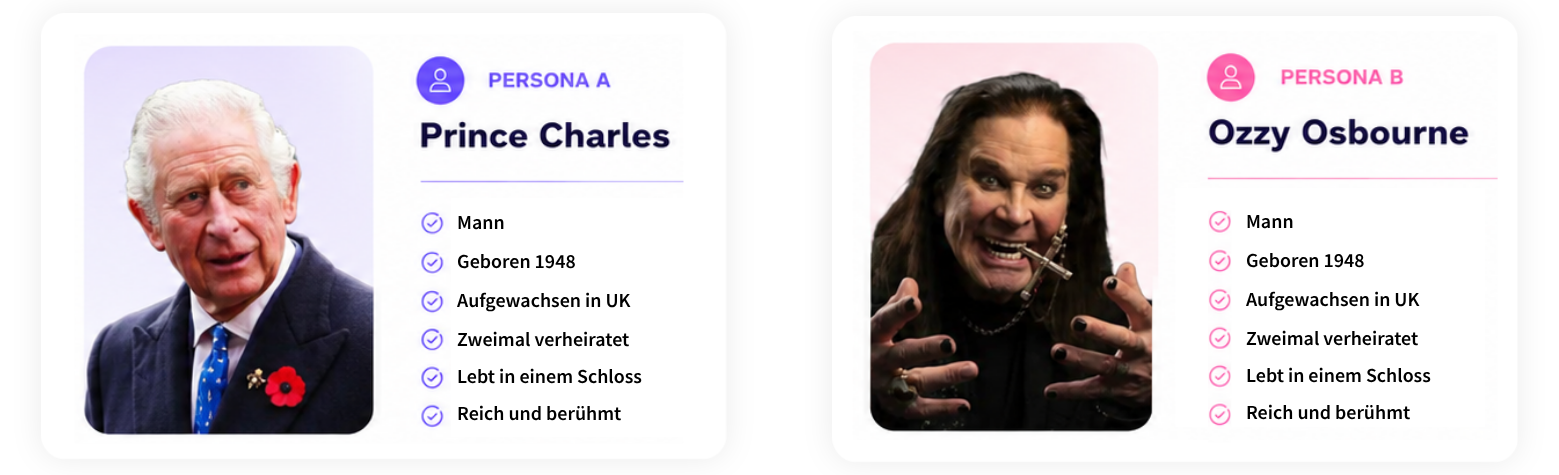
The same demographic data can cover very different profiles.
FC Zürich therefore structured its audiences around profiles combining several dimensions:
-
-
transaction history
-
stadium attendance
-
season ticket status
-
e-merchandise purchases
-
digital engagement
-
interests
-
consents and available communication channels
-
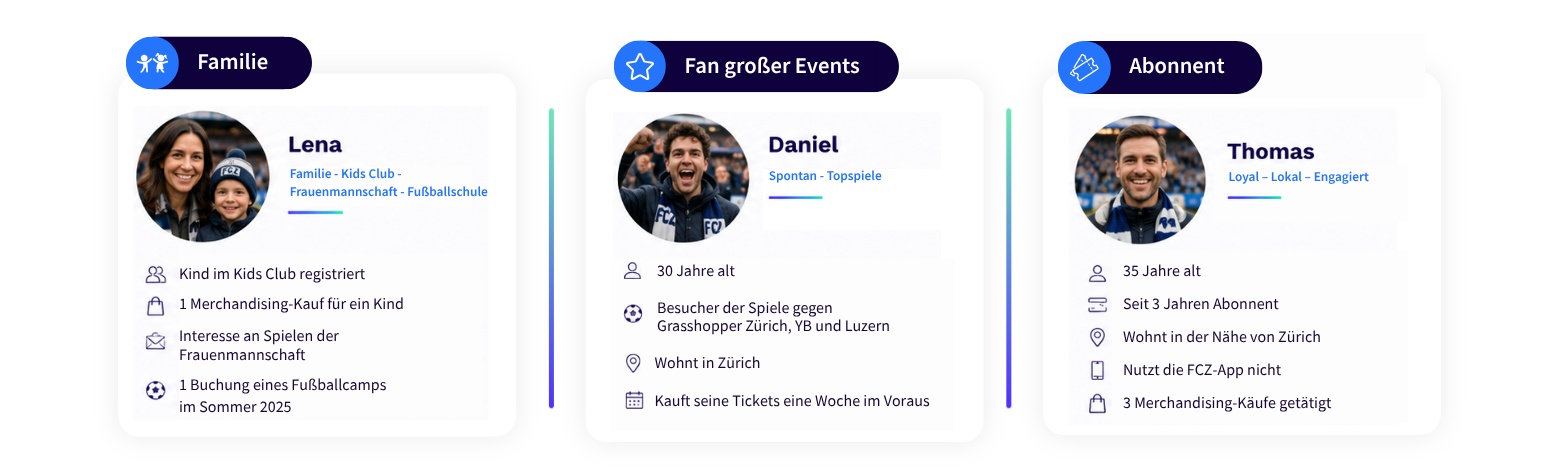
This approach made it possible to distinguish groups such as occasional buyers, regular buyers, season ticket holders, high-value fans, families, students, older fans and highly engaged multi-channel contacts.
The goal was not to attach a rigid label to every fan. It was to build a simple model that helps the club's teams better understand different fan behaviours and target their communication.
Understanding the family audience better
The family segment shows particularly well how this method turns fragmented information into a clearer operational picture.
The data describes a group living mostly in the Zurich region, with parents averaging 44 years old. Among the adults attending with children, many are women. At the same time, only a relatively small share holds a season ticket outside family events.
Transactional and engagement data add further context. Members of this segment often buy children's merchandise and show interest in invitations to women's football matches and other family activities. They also respond well to newsletters.
Taken together, these insights helped FC Zürich identify several relevant activation opportunities :
-
-
developing matchday experiences and activities designed for families
-
promoting family tickets, children's merchandise and suitable special events
-
sending invitations to women's football matches, family events and holiday camps
-
welcoming new members of the club's children's programme through a tailored communication journey
-
gathering feedback after each activity, to improve future editions
-
building long-term loyalty through family-oriented benefits and content
-
Rather than treating families as a purely demographic category, FC Zürich can now address them as an audience with its own habits, expectations and moments of engagement .
A view of season ticket holders that is easier to act on
The same method was applied to season ticket holders .
The profile combines demographic information, place of residence, renewal behaviour, stated or observed interests and digital engagement.
The data describes a group averaging 35 years old, of whom 38% are over 40. While the majority live in the Zurich region, around 30% live more than ten kilometres from the stadium. The segment is 80% male.
The profile also shows strong loyalty: last season, the renewal rate reached 90%. Other behavioural signals show that some season ticket holders are interested in women's football or in B2B offers. 15% used the club's app, and half clicked on a marketing campaign during the season.
These insights gave FC Zürich a more precise basis for its communication strategy around season tickets.
Activations included:
-
-
a renewal campaign for season ticket holders who have not yet started the process
-
a reactivation campaign for former season ticket holders who did not respond to the previous campaign
-
an automated message for fans who have attended four times, as a possible bridge between regular matchday attendance and a future season ticket offer
-
Distinguishing these audiences lets the club adjust its message to the fan's actual relationship with FC Zürich , rather than sending everyone the same renewal reminder.
From fan insight to new partnership revenue
The value of structured fan profiles goes beyond the club's own communication.
Once audience size, interests, behaviour and channel engagement are known, FC Zürich can build far more relevant activation opportunities for commercial partners .
The approach starts by analysing all of the club's existing fan touchpoints : newsletters, text messages, forms, the mobile app, social media. For each channel, the club can then define:
-
-
activation frequency
-
addressable audience size and profile
-
visibility for sponsors
-
relevant performance indicators such as opens, clicks, registrations or sales
-
These insights translate directly into attractive, targeted sponsorship packages , whether matchday activations or seasonal digital partnerships.
Personas thus create a shared basis for targeting, running campaigns and measuring their effect. They also help the club build partnership offers better aligned with fans' interests and sponsors' goals.
What made the difference
-
A shared view of fan interactions , by bringing every touchpoint into one environment.
-
Segmentation based on behaviour as well as demographics , for a more precise understanding of audiences.
-
Activatable personas , with concrete communication and engagement opportunities.
-
An approach that scales, and that keeps learning with every new interaction.
A CRM strategy that keeps getting more personal
For FC Zürich, personas are not static descriptions of its fans. They form a working frameworkthat evolves as new interactions, purchases and engagement signals feed into the club's digital ecosystem.
By combining data from several sources, the club gradually refines its understanding of each audience, identifies the right moments to communicate and builds journeys suited to different levels of loyalty and engagement.
Arenametrix provides the infrastructure to unify fan interactions, structure segments and activate them across channels. FC Zürich keeps control of the strategy: the club decides which audiences matter, which experiences to build and how each profile should be addressed.
What emerges is a basis not only for more relevant marketing campaigns, but also for stronger fan experiences, better-grounded partner activations and the continued growth of the club's CRM capability .