Every season, new faces appear in your auditorium. A curious public, walking through the doors of your theatre, concert hall, arts centre or festival for the first time. But how many of them will come back?
What if lasting loyalty came down to the quality of the welcome you give these first-time visitors?
The challenge: turning a first visit into a cultural habit
The challenge is simple but fundamental: making that first time the start of a long relationship. Without particular attention, many first-time visitors leave and never return. The organisations that manage to keep them are usually the ones that recognised them, listened to them, and above all gave them a reason to come back through a dedicated welcome journey.
With that in mind, several organisations working with Arenametrix have designed an automated four-step relationship journey, combining marketing automation, personalisation and care at every point of contact.
Step 1: creating the first connection
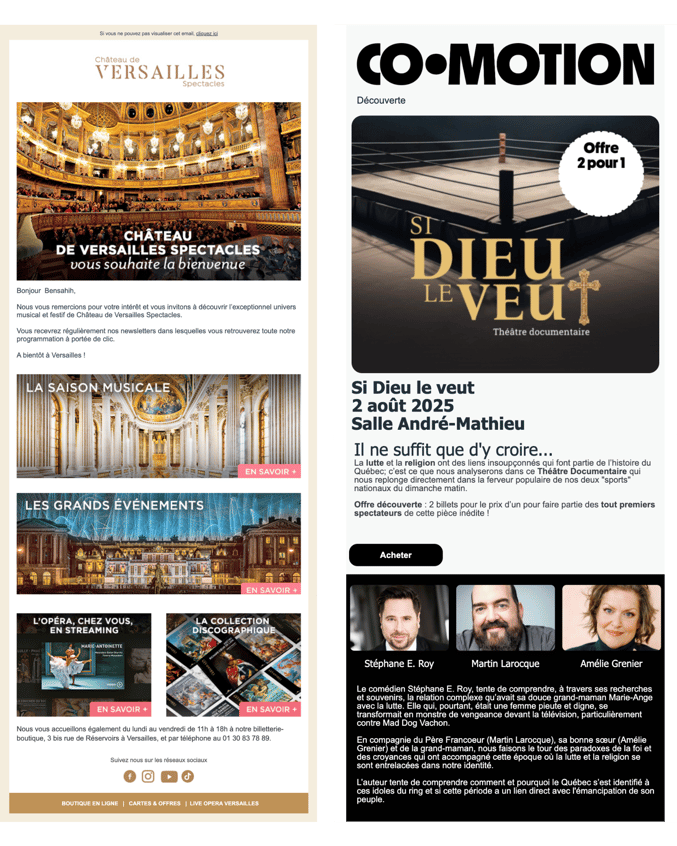
It all starts before the first visit. When a contact joins your database — a newsletter sign-up, an account creation — they are often still at the discovery stage. A welcome email is then triggered automatically to:
- Introduce the venue and its world
- Highlight a few favourites from the programme
- Offer a glimpse behind the scenes or of the team
Goal : Spark curiosity, build affinity, and invite that first booking.
If no purchase follows in the days after, a gentle reminder can offer a discovery deal : a preferential rate, a two-for-one seat, and so on.
Step 2: making the first purchase count
Once the ticket is booked, the relationship with the visitor is only beginning. Too often neglected, this moment of transition — between the purchase and the first visit — is in fact strategic.
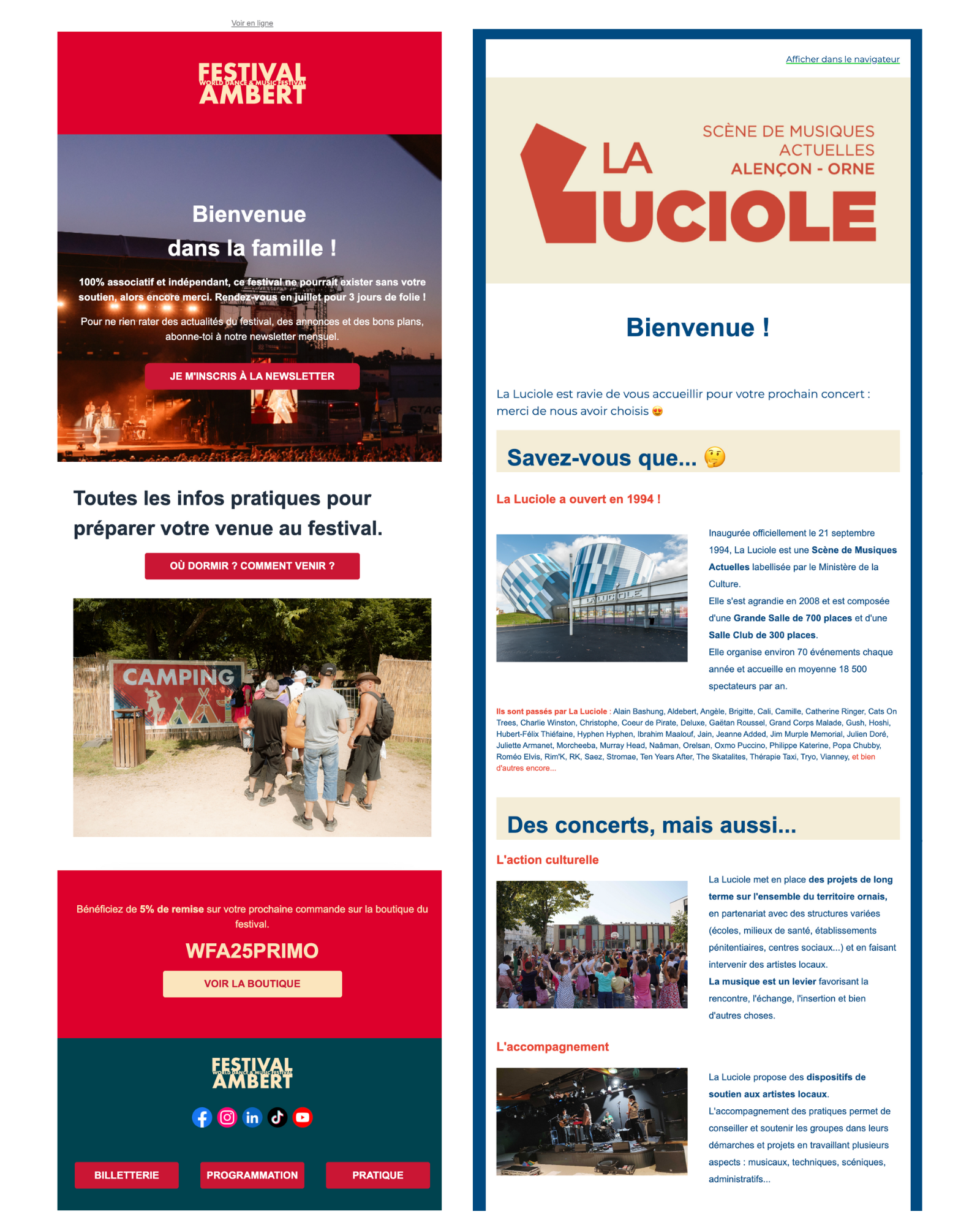
To that end, several cultural venues have automated a personalised thank-you email triggered by the first purchase. That email serves several purposes:
- Officially welcoming the visitor into the community
- Reassuring them and making the first visit easier with practical information
- Building anticipation by sharing exclusive content
It usually contains:
- A warm word of welcome, in the voice of the team
- Some practical advice : times, access, parking, accessibility, food and drink, or even a « survival guide » for a first time at the theatre
- Some immersive extras : behind the scenes of the show, stories from rehearsals, portraits of the artists programmed, playlists, or teaser videos
- Sometimes, an invitation to join the community : newsletter sign-up, social media, or an ambassador programme
Step 3: listening before following up
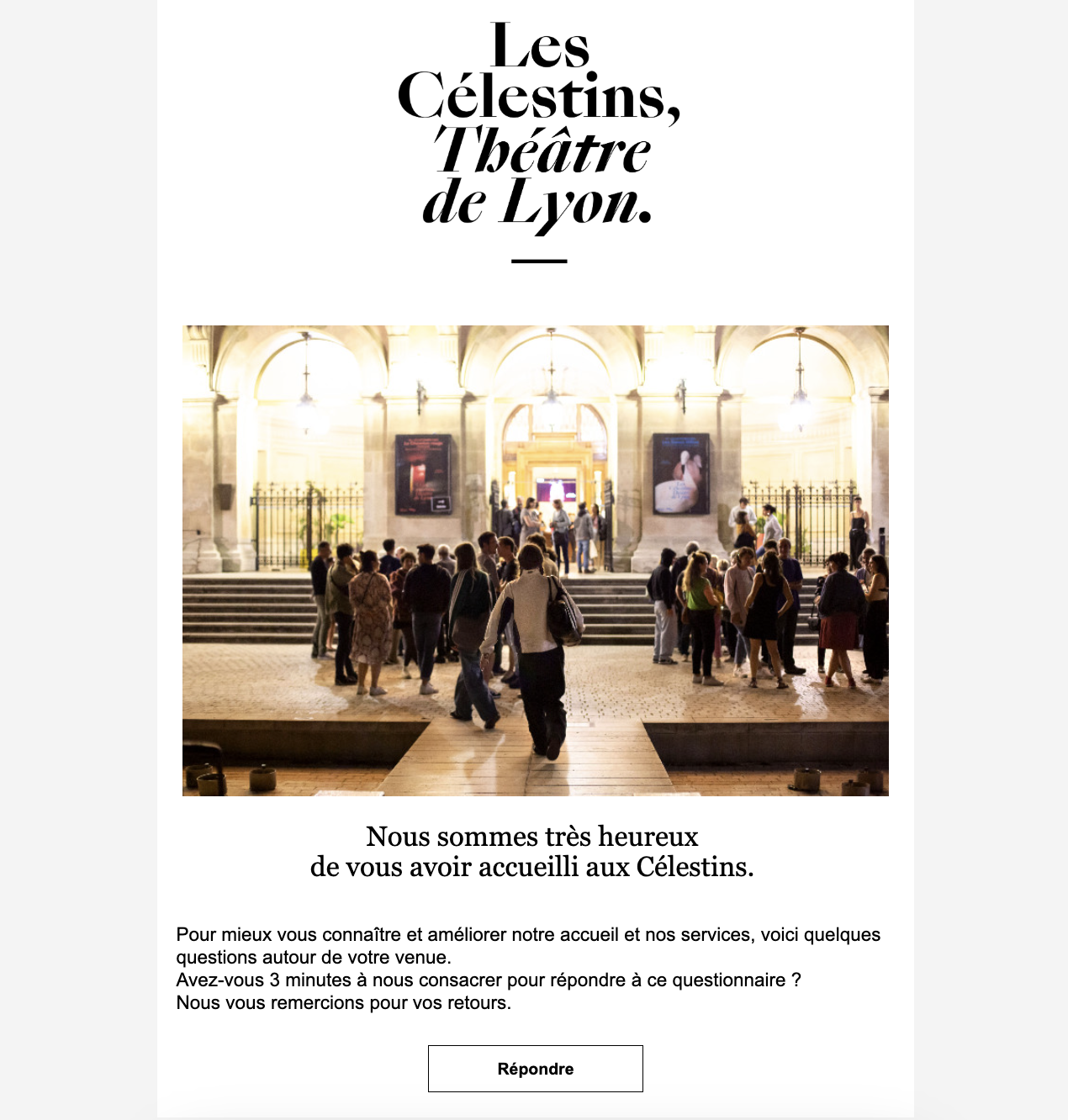
The show is over? That is the perfect moment to ask for feedback, with no commercial message attached. A simple, human email with a link to a questionnaire invites the visitor to share what they felt, what surprised or bothered them, whether they feel ready to come back, and so on.
Goal : Valuing what your audience thinks , spotting points of friction and building trust.
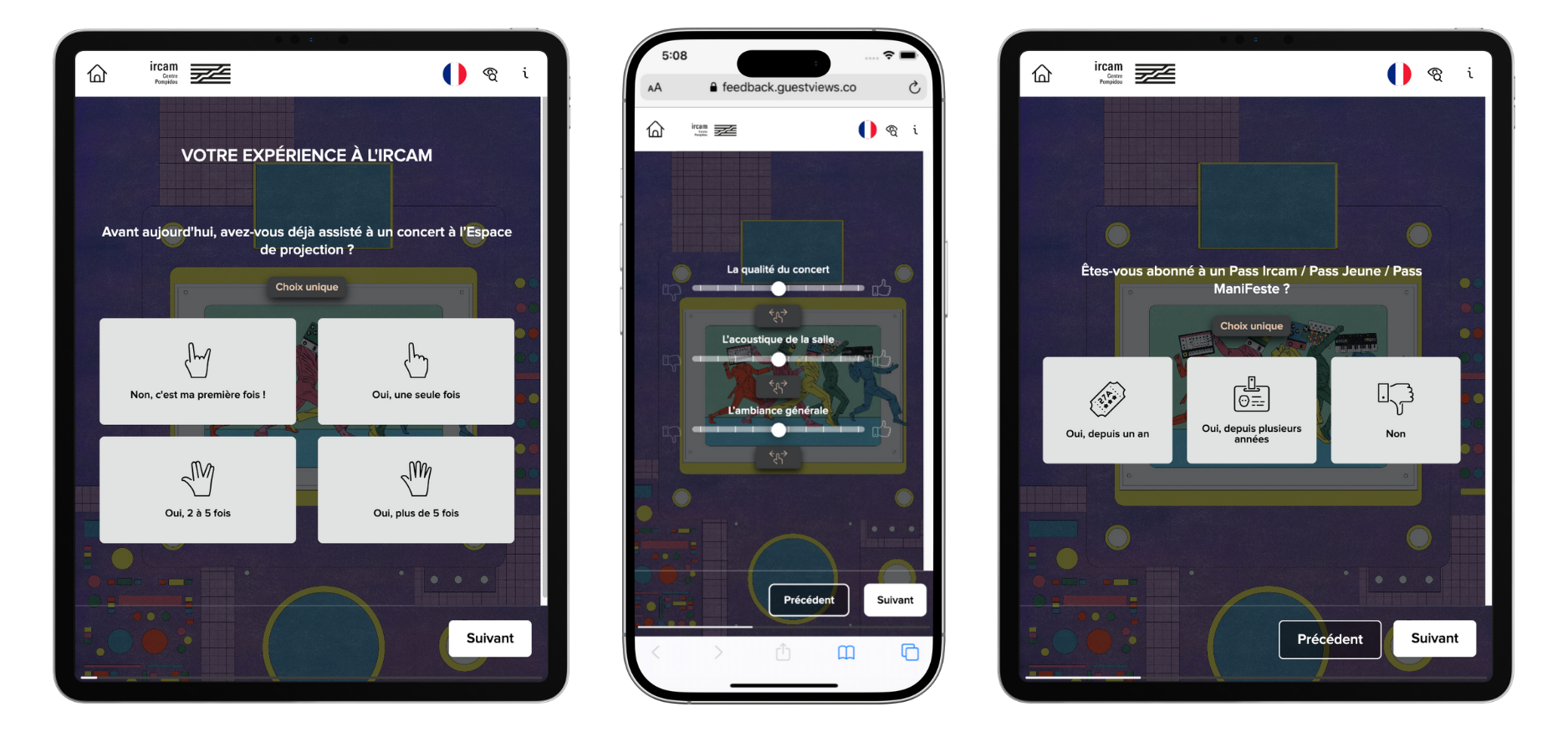
Here is the visitor listening set-up by GuestViews put in place by the Ircam in 2024. What was at stake? Better understanding what audiences expect, identifying their cultural habits, measuring their satisfaction and building a connection with each of them.
Step 4: inviting them back, at the right moment
If no further purchase follows in the weeks or months after that first visit, it is time to act, to keep curiosity alive, anchor the positive memory of the first experience and lay the ground for a lasting relationship.
A personalised thank-you messagesome time after the visit can already make the difference. Not an impersonal automated email, but a real word that says: « Thank you for coming. We hope to see you again soon. » That attention builds a bridge to what comes next. Such an email might contain:
- A show recommendation in keeping with the first visit
- A knowing message : « Shall we do it again? »
- A small nudge : a symbolic discount, a discovery rate, a two-for-one seat…
Goal : Following up without pressure, showing that you have thought about them, and that they belong with you.
Bonus: thinking of first-time visitors outside the journey too
Keeping first-time visitors is not limited to an automated journey after their first visit. It can also slip discreetly, and effectively, into your regular communication.
Monthly newsletters, programme emails, special offers: every message is a chance to reactivate that budding connection. Some organisations choose toinclude specific blocks in their sends, visible only to first-time visitors.
A few examples of personalised messages to slip in:
- « Came for the first time recently? Here are three shows to continue the adventure. »
- « Still new here? This little in-house glossary is for you. »
- « We are thinking of you: a free seat for your second visit. »
These discreet attentions, tucked into a familiar format, remind first-time visitors that they are not a contact like any other. A gentle way of keeping the connection alive without seeming to insist.
What to take away
Keeping a first-time visitoris not a matter of chance. It is a strategy that calls for: listening, personalisation, and a good dose of anticipation .
With a well-designed relationship journey, every first step can become a fine story. Want to put this kind of strategy in place in your organisation? Write to us, we will guide you step by step.