How do you get new audiences through the doors of your opera house? Once, to begin with. Then twice, then three times… That is the compelling question our live performance lead Apolline Locquet chose to tackle with our partner Alain Duchêne Marketing Director of the Grand Théâtre de Genève, in a keynote at Communicating the arts – Lausanne. Each year this conference brings together around a hundred professionals from museums and the performing arts to discuss the challenges facing the cultural sector.
« The most important thing for us is to have two strategies: a strategy for welcoming new audiences, and then a strategy for keeping them. »
Alain Duchêne - GTG
I. Welcoming a new audience to the opera
To diversify its audiences, the GTG is full of ideas: practical ones, such as arranging babysitting, and strategic ones, such as creating a distinctive experience: La Plage. But is that enough to welcome a new audience to the opera properly? Let us go back over the three key steps Alain Duchêne shared.
1. Develop an offer that fits:
from experience to destination
Going from captivating content lasting a few seconds on your phone to an opera from another century that stretches across time… A contemporary problem that has to be taken seriously. How do you build a bridge between four hours of Wagner and the audiences who slip away because they live at a different pace?
|
The GTG's answer: La Plage, a new destination « La Plage is five productions, a myriad of activities, mutual support and partnerships, school and community programmes, and bespoke projects for everyone trying to come ashore, which is how we get to meet them. » – Read more on the GTG website. In an original response to the attention economy, the GTG transforms the live performance experience by creating a space dedicated to new audiences. The Apéropéras and Intropéras draw people in and make them feel at home. Through experiences suited to their way of life, the opera gradually becomes a « destination » of choice for these new audiences. |
And it cannot be said often enough: knowing your audiences determines the success of any development policy. That is how the GTG managed to identify new segments to explore and create an experience suited to each type of audience. Beyond socio-demographic criteria — the average age of the audience, for instance, which often leads opera houses to adopt strategies for attracting younger people — it is also the booking and purchase behaviour of your audiences that needs to be understood.
To that end, Arenametrix, the Grand Théâtre's CRM, integrates purchase history data. It also makes it quick to see when and at what average price your audiences buy their tickets. The « recency » and « loyalty » filters help you follow their habits in a click.
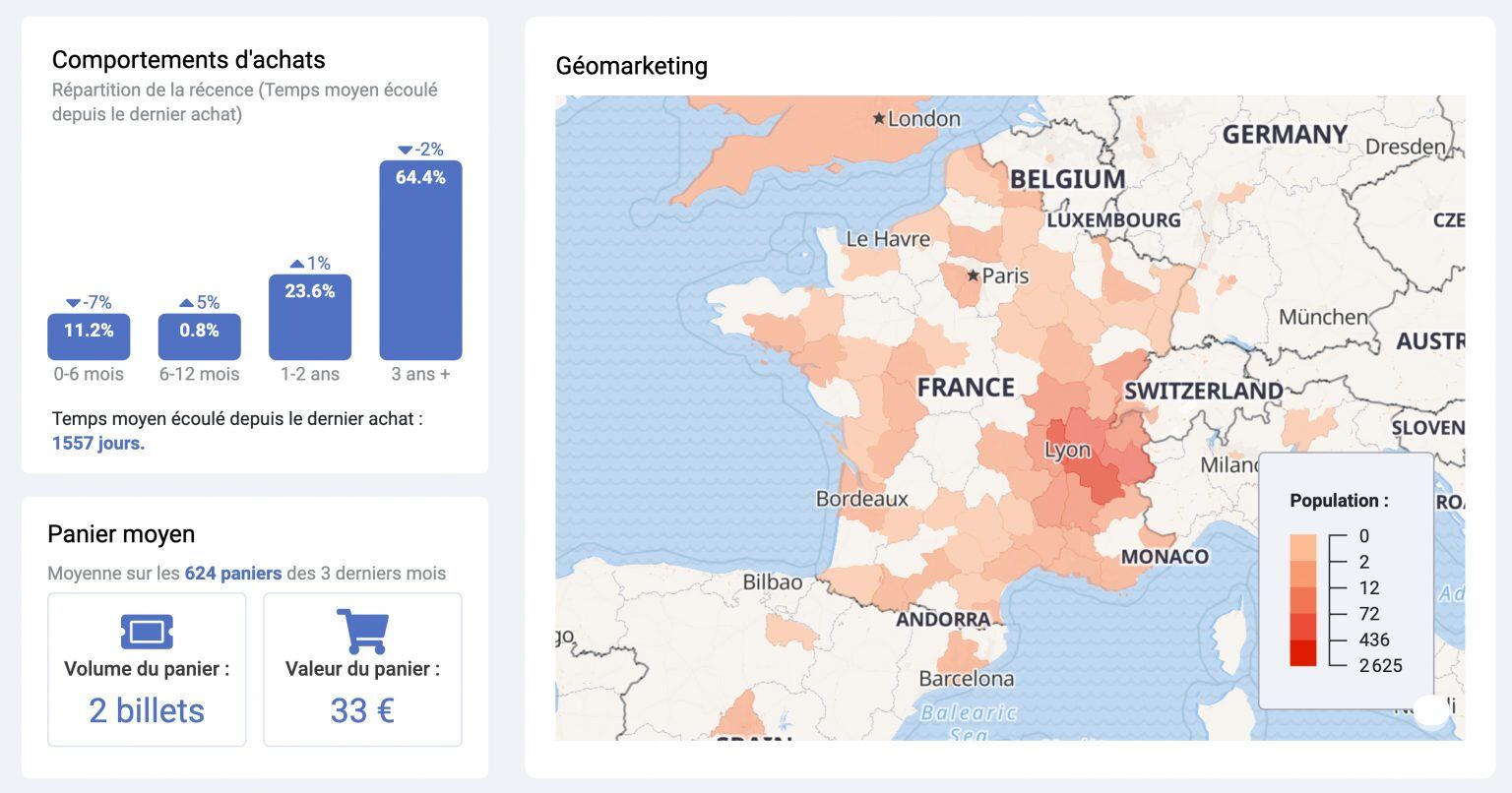
your statistics at a glance.
2. Promote your events through partner channels
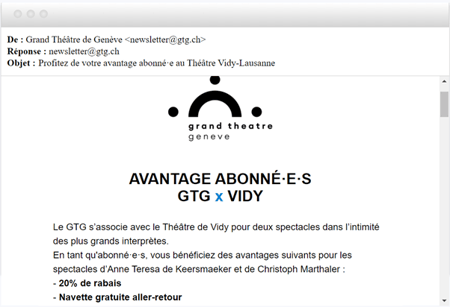
Once your new offer exists, the question of promoting it arises. Where do you find your new audiences? And above all, how do you speak to them in a way that creates desire and action? A good practice from the GTG: exchanging visibility in the newsletters of chosen partners.
First exchanges with new audiences are more fruitful when they happen in a familiar, well-regarded context. For that, you can favour touchpoints towards which the people you are targeting already feel an affinity. A partner's newsletter, for example.
« To attract new audiences, you have to multiply the touchpoints »
Alain Duchêne - GTG
So think about building partnerships with other cultural organisations such as art schools or music festivals. On the communication side, you can then share the theme of your artistic season and your programme with your partners. They will choose the best way to pass that on to their audiences. And you will do the same for them.
3. Strengthen the experience with dedicated communication
One last point that cultural institutions would gain from handling systematically: welcoming new audiences with dedicated communication. At first glance it may look more efficient internally to merge new audiences into your main newsletter list. But over the long term that deprives you of the loyalty benefits of a personalised welcome campaign. Paying particular attention to these first-time buyers is how you give yourself every chance that they come back.
Concretely, a suitable CRM lets you :
- add new audiences to several mailing lists (multi opt-in) in line with GDPR
- filter your contact base by purchase period and date of attendance to build specific email campaigns.
This valuable information lets you feed your strategic thinking and support your cultural work. To strengthen the experience of first-time visitors, you can then personalise the tone and content of your welcome campaign with distinctive elements.
II. Keeping the opportunistic visitor
As you will have guessed, the welcome campaign for your new audiences already gives you a fine opportunity to begin your loyalty strategy. Alongside post-event campaigns aimed at enriching your customer knowledge, personalised event suggestions are a powerful way of converting someone into a returning visitor. All the more so as you can lean on a tool such as marketing automation to script automatic suggestions simply and quickly.
1. Send targeted, personalised suggestions
An increasingly common « dream » is spreading through cultural institutions: creating their own Netflix of art, able to serve content up on a plate. The strength and relevance of that entertainment giant's personalised suggestions have been amply demonstrated.
The good news: you too can put in place a system of targeted, personalised suggestions through your CRM. Simply, and with respect for your audiences' data. By leaning on your core business, particularly your expertise in programming, and on your knowledge of your audiences, you already know which kinds of show to recommend to newcomers so they can continue discovering opera.
What do suggestions that fill your auditorium require? A good categorisation of your shows and fine segmentation of your contact base. Alongside more general communication such as your main newsletter, you can then run targeted, personalised actions.
« The key to starting a personal conversation with your audiences is to offer them targeted, relevant communication. »
Alain Duchêne - GTG
2. Gain efficiency through marketing automation
Very often, the main obstacle facing cultural institutions that want to develop a broader range of communication is time. Sorting and selecting contacts alone can take several energy-sapping steps. That is why a marketing automation tool connected directly to your CRM and contact lists proves extremely valuable.
« Marketing automation » is simply the automation of the tedious tasks around your marketing (sending an email or a text, segmenting audiences and so on). You only have to choose one or more triggers ahead of the action, according to your audiences' past or future behaviour. For example: attending an event, buying a subscription, visiting a page on your website. The scenario can stretch over time in line with the audience journey you define beforehand.
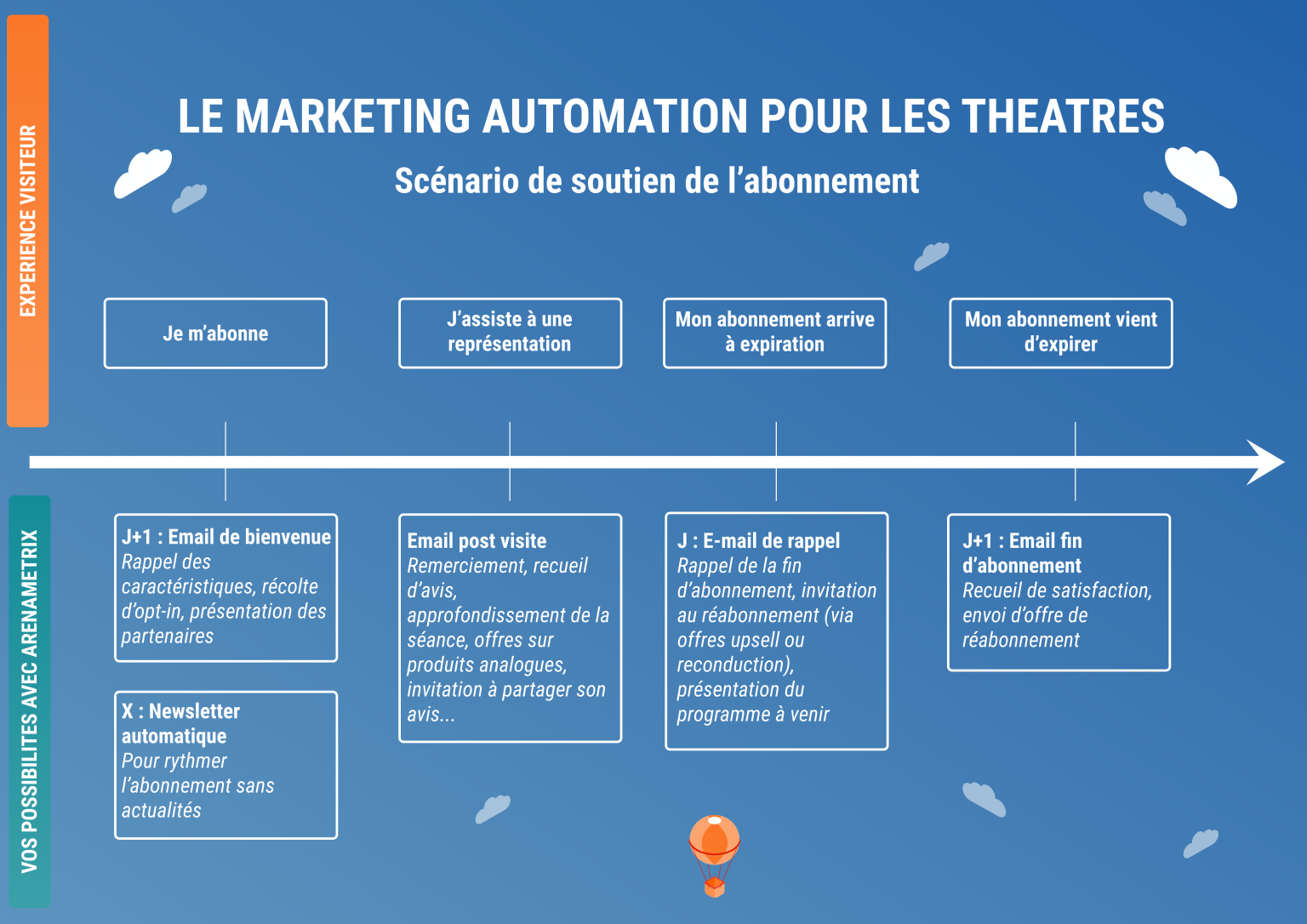
|
The GTG's projects: the « from Brunch to Wagner » scenario
|
Marketing automation is of course equally relevant if you want to offer complementary experiences to a regular visitor. Your CRM should let you control the « commercial pressure » you apply to your contact base. By building your own audience journeys, you put in place a strong loyalty strategy suited to your institution's identity and to the audiences you want to welcome.
Our thanks to the Grand Théâtre de Genève for its renewed trust again this year.